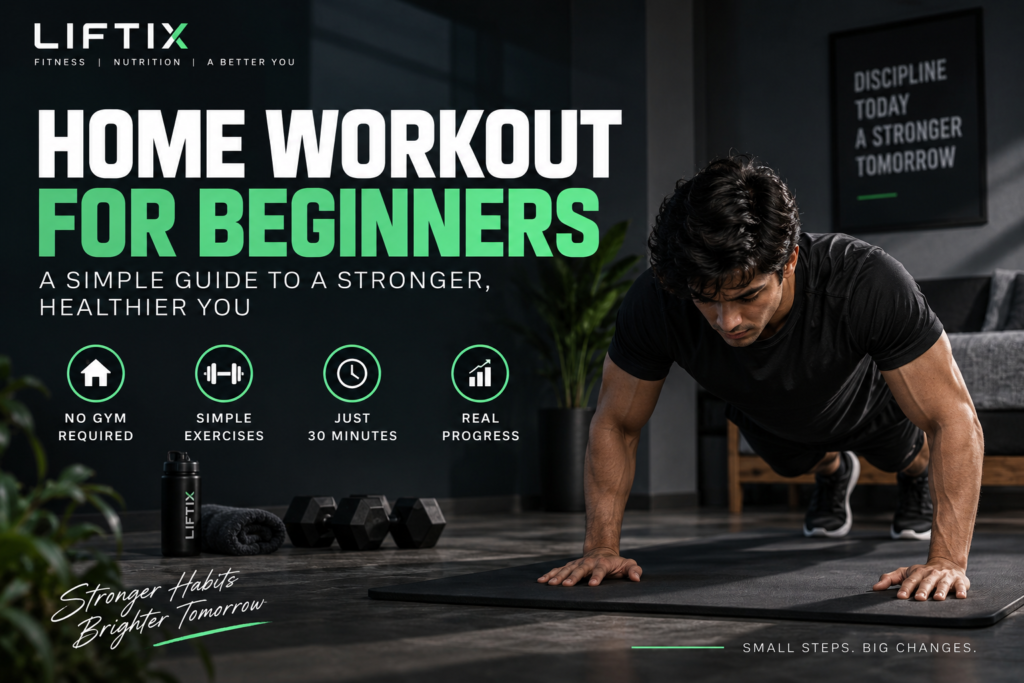
Home workout for beginners with a man doing push-ups at home
WORKOUTS

Home Workout for Beginners: A Complete Guide to Starting Fitness at Home

Starting a fitness journey can feel overwhelming, especially if you have never worked out before. The good news is that you do not need a gym membership or expensive equipment to get started. A simple home workout for beginners can help you build strength, improve your fitness and develop a consistent exercise routine from the comfort of your home. Whether you want to become more active, build muscle, improve your endurance or simply adopt a healthier lifestyle, starting with basic exercises is a great approach. In this guide, you will learn how to start working out at home for beginners, which exercises to choose, how often you should train and how to gradually make your workouts more challenging. Why Should Beginners Work Out at Home? Working out at home can be an excellent option for people who are new to fitness. It removes many of the barriers that can make starting exercise difficult. 1. You Don’t Need Expensive Equipment Many effective beginner exercises use your own body weight. Exercises such as squats, push-ups, lunges and planks can be performed without gym equipment. This makes a beginner home workout without equipment a convenient and affordable way to start. 2. You Can Save Time Going to the gym involves travelling, changing and sometimes waiting for equipment. A home workout can be completed in a relatively short amount of time. Even a 20 to 30-minute workout can be a useful starting point. 3. You Can Exercise at Your Own Pace Beginners often need time to learn proper exercise technique. Working out at home allows you to focus on your movements without feeling pressured by other people. 4. It Is Easier to Build a Routine When your workout space is only a few steps away, it can be easier to fit exercise into your daily schedule. Consistency is more important than having a complicated workout program. Best Home Workout Exercises for Beginners If you are wondering about the best home workout for beginners, start with basic movements that train different muscle groups. You do not need to perform dozens of exercises. A few fundamental movements can provide a strong foundation. 1. Bodyweight Squats Bodyweight squats are one of the best exercises for beginners because they train several lower-body muscles while also teaching you an important movement pattern. How to perform a squat: Beginner target: 2–3 sets of 8–12 repetitions. 2. Push-Ups Push-ups primarily train your chest, shoulders and triceps while also requiring your core to remain stable. If a standard push-up is too difficult, beginners can start with incline push-ups or knee push-ups. Beginner target: 2–3 sets of 5–10 repetitions. Focus on controlled repetitions instead of trying to complete as many as possible. 3. Glute Bridges Glute bridges are a beginner-friendly exercise that targets the glutes and helps develop lower-body strength. How to perform a glute bridge: Beginner target: 2–3 sets of 10–15 repetitions. 4. Lunges Lunges can help improve lower-body strength, balance and coordination. Beginners can start with stationary lunges before progressing to walking lunges. Beginner target: 2 sets of 6–10 repetitions per leg. Keep your movements controlled and maintain good balance throughout each repetition. 5. Planks Planks are a simple bodyweight exercise for training the core. Instead of trying to hold a plank for several minutes, beginners should focus on maintaining good technique for a manageable amount of time. Beginner target: 2–3 sets of 15–30 seconds. 6. Bird Dogs Bird dogs are useful for beginners because they train core stability, balance and coordination. Start on your hands and knees. Slowly extend one arm and the opposite leg, pause, return to the starting position and switch sides. Beginner target: 2–3 sets of 6–10 repetitions per side. 7. Jumping Jacks Jumping jacks can add a cardiovascular component to a beginner workout. If jumping is uncomfortable, use a low-impact variation by stepping one foot out at a time. Beginner target: 20–30 seconds. 30-Minute Home Workout for Beginners If you are looking for a 30 minute home workout for beginners, the following routine provides a simple full-body starting point. Warm-Up: 5 Minutes Before exercising, spend around five minutes preparing your body. Try: The goal is to gradually increase your activity level before beginning the main workout. Main Workout: 20 Minutes Complete 2–3 rounds of the following exercises: Exercise Repetitions/Time Bodyweight Squats 10–12 reps Incline or Knee Push-Ups 5–10 reps Glute Bridges 12–15 reps Lunges 6–10 reps per leg Bird Dogs 6–10 reps per side Plank 15–30 seconds Rest when necessary. Beginners do not need to rush from one exercise to another. Cool Down: 5 Minutes After your workout, spend a few minutes walking slowly and performing gentle stretches. Avoid forcing a stretch or stretching into pain. How Often Should Beginners Work Out at Home? A common question is how often should beginners work out at home? For most beginners, starting with 2–3 strength workouts per week is a practical approach. For example: Monday: Full-body workoutTuesday: Walking or restWednesday: Full-body workoutThursday: RestFriday: Full-body workoutSaturday: Light activitySunday: Rest You do not have to follow this exact schedule. Choose a routine that fits your lifestyle and allows adequate recovery. How to Start Working Out at Home for Beginners Knowing what to do is only part of the process. Building a sustainable routine is what makes your fitness journey easier to maintain. Start With Short Workouts You do not need to exercise for an hour when you are starting. A 20–30 minute workout can be enough to establish the habit. Focus on Proper Form Learning how to perform an exercise correctly is more important than completing a large number of repetitions. Start slowly and practice controlled movements. Increase the Difficulty Gradually Once your workout becomes comfortable, gradually increase the challenge. You can do this by: This gradual approach can make it easier to continue progressing. Beginner Home Workout Without Equipment One of the biggest advantages of home training is that you can create an effective routine without buying equipment. A beginner home workout without equipment could include: Lower Body
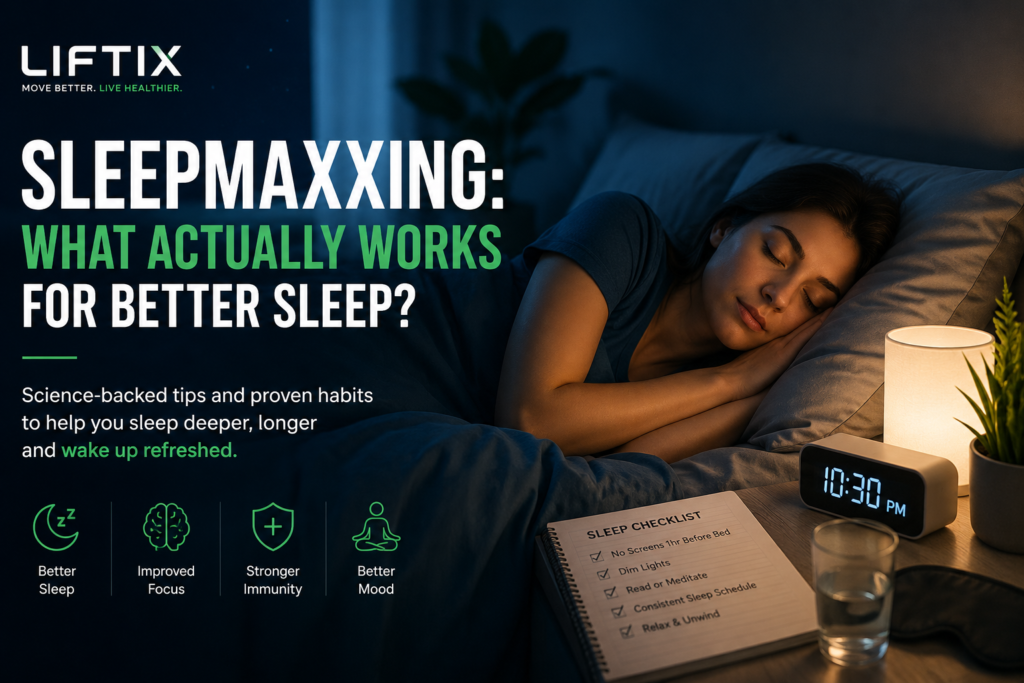
Person sleeping in a comfortable bedroom for better sleep
SLEEP HEALTH

Sleepmaxxing: 7 Simple Ways to Improve Your Sleep | Liftix

Introduction Sleep is one of the most important parts of a healthy lifestyle, yet it is often the first thing people sacrifice when life gets busy. You may have come across the term “sleepmaxxing” on social media. It refers to the growing trend of deliberately improving your sleep through better habits, routines and your sleep environment. But with so many sleep hacks online, it can be difficult to know what is actually useful. At Liftix, we believe better health doesn’t require complicated routines. So let’s look at some simple habits that can help you build a better sleep routine. What Is Sleepmaxxing? Sleepmaxxing is essentially the practice of optimizing your sleep. The idea isn’t to buy expensive gadgets or follow an extreme routine. Instead, it focuses on improving the basic factors that influence your sleep, such as: Your sleep schedule Your bedroom environment Your evening routine Your exposure to light Your caffeine and food habits Your daily physical activity The goal is simple: make quality sleep a consistent part of your lifestyle. 1. Keep a Consistent Sleep Schedule One of the simplest ways to improve your sleep is to maintain a relatively consistent bedtime and wake-up time. Going to bed and waking up at completely different times every day can make it harder to establish a regular sleep routine. Try to: Go to bed at roughly the same time each night. Wake up around the same time each morning. Avoid dramatically changing your schedule on weekends. Consistency matters more than trying to find the “perfect” bedtime. 2. Create a Better Sleep Environment Your bedroom can have a major impact on how comfortable you feel when trying to sleep. Try making your environment: Dark: Reduce unnecessary light around your bed. Quiet: Minimize noise where possible. Comfortable: Use bedding and a mattress that allow you to relax. Cool: Keep the room at a comfortable temperature rather than making it excessively warm. You don’t need an expensive bedroom makeover. Small changes can make your sleeping environment more comfortable. 3. Reduce Screen Time Before Bed Scrolling through social media or watching videos immediately before sleeping can make it harder to wind down. Instead of spending the last part of your evening on your phone, try creating a simple wind-down routine. For example: Phone away → dim the lights → read → relax → sleep You don’t have to completely eliminate screens from your evening. The goal is to create some time between your digital activities and bedtime. 4. Be Smart About Caffeine Caffeine can help you feel more alert during the day, but consuming it too close to bedtime may interfere with your ability to fall asleep. If you’re having trouble sleeping, pay attention to when you’re consuming coffee, tea, energy drinks or other caffeinated beverages. Try moving your caffeine intake earlier in the day and see whether your sleep improves. 5. Get Regular Physical Activity Exercise isn’t just about building strength or improving fitness. Staying physically active can also support a healthier lifestyle and sleep routine. You don’t necessarily need an intense workout every day. You could: Go for a walk Visit the gym Play a sport Cycle Do a home workout The important thing is to stay active consistently. 6. Build a Relaxing Night Routine Your body and mind need time to transition from a busy day to sleep. Create a simple routine that helps you relax. For example: 10:00 PM: Finish work/study10:15 PM: Put your phone away10:20 PM: Prepare for bed10:30 PM: Read or relax11:00 PM: Sleep Your routine doesn’t need to look exactly like this. Find something that fits your lifestyle and keep it consistent. 7. Don’t Obsess Over Sleep Tracking Smartwatches and sleep-tracking apps can provide interesting information about your sleep, but they shouldn’t become another source of stress. If you constantly check your sleep score and worry about every small change, tracking can become counterproductive. Use technology as a tool, not as a reason to become anxious about your sleep. What About Popular Sleepmaxxing Hacks? Social media is full of sleep hacks, from expensive supplements and gadgets to unusual routines. Some may be useful for certain people, but more expensive doesn’t automatically mean better. Before spending money on a new sleep product, start with the basics: Consistent schedule + comfortable environment + healthy lifestyle + relaxing routine These fundamentals should come before trying complicated hacks. A Simple Liftix Sleep Checklist Before going to bed, ask yourself: ☐ Did I maintain a reasonably consistent sleep schedule?☐ Is my bedroom comfortable and dark enough?☐ Did I give myself time to wind down?☐ Did I avoid caffeine too close to bedtime?☐ Did I stay physically active during the day?☐ Did I give myself a break from screens before sleeping? You don’t have to get everything perfect. Small improvements, repeated consistently, can become better habits. Final Thoughts Sleepmaxxing doesn’t have to mean optimizing every tiny detail of your sleep. For most people, the best place to start is surprisingly simple: build a consistent routine, create a comfortable sleep environment, stay active and give yourself time to wind down. Don’t chase every viral sleep hack. Focus on habits that are realistic enough to maintain. Better sleep starts with better habits

PROTIEN MEALS

🥗 High-Protein Indian Foods: 15 Easy Options for Everyday Meals

Introduction Protein is an important part of a balanced diet. It helps support muscles, bones and many essential functions in the body. If you’re working out, trying to stay active, or simply looking to improve your everyday diet, getting enough protein can be useful. And you don’t need expensive supplements or complicated meals to include more protein in your diet. India has plenty of accessible protein-rich foods that can be incorporated into regular meals. Here are 15 easy options to consider. 1. Eggs 🥚 Eggs are one of the easiest protein-rich foods to add to your diet. You can have them boiled, scrambled, as an omelette or alongside your regular breakfast. Easy idea: Vegetable omelette with whole-grain toast. 2. Paneer Paneer is a popular vegetarian option and can be used in a variety of meals. Try it as: Easy idea: Paneer bhurji with roti. 3. Greek Yogurt / Hung Curd Greek yogurt and hung curd can provide protein while also being versatile. You can have them as a snack, breakfast or as part of a meal. Easy idea: Add fruit, nuts and seeds for a simple breakfast bowl. 4. Milk 🥛 Milk is an easy way to add protein to your everyday diet. Have it with breakfast, in smoothies or simply as a drink. Easy idea: A banana and milk smoothie. 5. Dal Dal is a staple in many Indian households and can contribute to your daily protein intake. Different varieties include: Easy idea: Dal + rice + vegetables for a balanced meal. 6. Chickpeas (Chana) Chickpeas are versatile and can be used in both meals and snacks. Try: Chana salad → Chana chaat → Chole → Roasted chana They’re especially convenient for vegetarian diets. 7. Rajma Rajma is another familiar Indian food that can contribute protein to your diet. A classic combination is: Rajma + rice + vegetables You can also add rajma to salads or wraps. 8. Soybeans Soy-based foods can be a useful protein option, particularly for people following vegetarian diets. You can include soybeans or other soy foods in meals depending on your preferences. 9. Tofu Tofu is another versatile plant-based option. It can be: Easy idea: Tofu and vegetable stir-fry. 10. Soya Chunks Soya chunks are an affordable and convenient way to add more protein to meals. You can use them in: Easy idea: Soya chunk curry with roti. 11. Peanuts 🥜 Peanuts are an easy snack and contain protein along with fats and other nutrients. You can have them roasted, add them to salads or use peanut butter with toast. Remember that peanuts and peanut butter are also calorie-dense, so portion size matters. 12. Almonds and Other Nuts Nuts can contribute protein to your diet while providing healthy fats. Try adding a small portion to: They’re best viewed as a nutrient-rich addition, rather than your main protein source. 13. Fish 🐟 For people who eat non-vegetarian food, fish can be an excellent protein source. You can prepare it grilled, baked, steamed or as part of an Indian curry. Easy idea: Grilled fish with vegetables and rice. 14. Chicken 🍗 Chicken is a popular high-protein food, particularly among people who exercise regularly. Simple options include: Easy idea: Grilled chicken with rice and vegetables. 15. Protein Powder Protein powder can be convenient when you’re struggling to get enough protein from food. However, it doesn’t need to replace normal meals. A protein shake can be used as a convenient addition to an otherwise balanced diet. Easy idea: Protein powder blended with milk, oats and fruit. How Much Protein Do You Need? There isn’t one protein target that works for everyone. Your needs can depend on factors such as: Someone who regularly participates in strength training may have different needs from someone who is mostly sedentary. Instead of focusing only on a single number, start by making sure your meals regularly include a good protein source. How to Add More Protein to Your Everyday Meals You don’t need to completely change your diet. Try simple swaps and additions. Breakfast Eggs + toast + fruit or Greek yogurt + oats + fruit Lunch Dal + rice + vegetables or Chicken/paneer + roti + salad Snack Roasted chana + fruit or Yogurt + nuts Dinner Paneer/tofu/chicken + vegetables + roti Small changes can make it easier to increase your overall protein intake. Vegetarian vs Non-Vegetarian Protein Sources You don’t need to eat meat to get protein. Vegetarian options Non-vegetarian options The best approach is to choose foods that fit your dietary preferences, budget and lifestyle. Don’t Forget About a Balanced Diet Protein is important, but it isn’t the only part of a healthy diet. Your meals should also include a variety of: 🥦 Vegetables🍎 Fruits🌾 Whole grains🥜 Healthy fats💧 Adequate fluids Think of protein as one part of the bigger picture, rather than the entire diet. Final Thoughts Getting more protein doesn’t have to mean eating complicated meals or relying entirely on supplements. From dal, paneer and chickpeas to eggs, chicken and fish, Indian diets already have plenty of options. Start by adding a protein source to your regular meals and build the habit gradually. Better nutrition doesn’t have to be complicated. It just needs to be consistent.