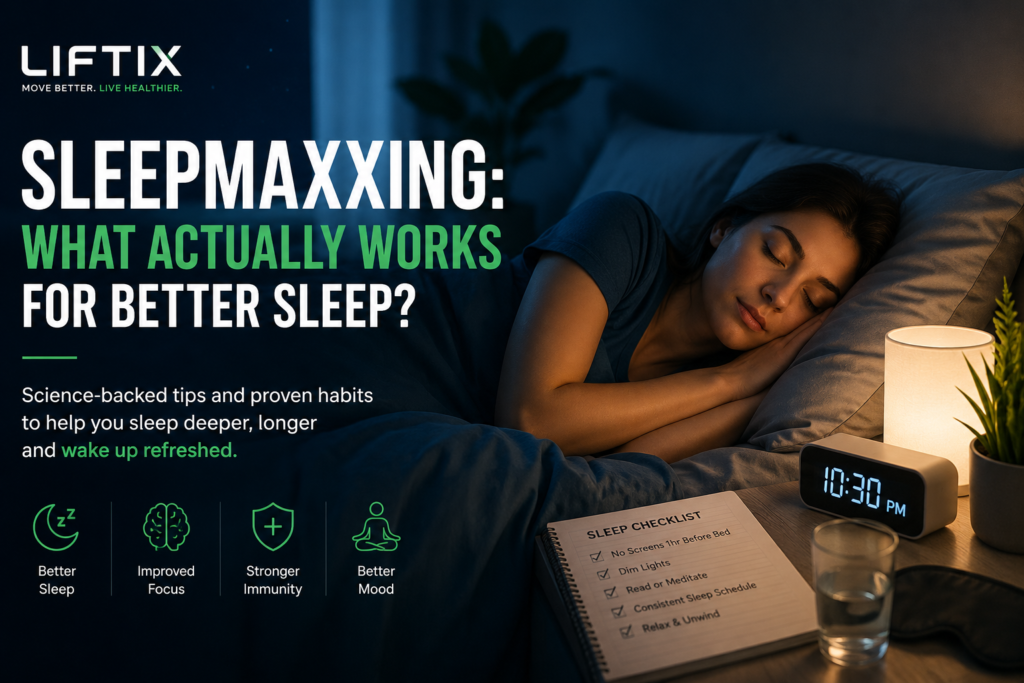
Sleepmaxxing: 7 Simple Ways to Improve Your Sleep | Liftix
Introduction Sleep is one of the most important parts of a healthy lifestyle, yet it is often the first thing people sacrifice when life gets busy. You may have come across the term “sleepmaxxing” on social media. It refers to the growing trend of deliberately improving your sleep through better habits, routines and your sleep environment. But with so many sleep hacks online, it can be difficult to know what is actually useful. At Liftix, we believe better health doesn’t require complicated routines. So let’s look at some simple habits that can help you build a better sleep routine. What Is Sleepmaxxing? Sleepmaxxing is essentially the practice of optimizing your sleep. The idea isn’t to buy expensive gadgets or follow an extreme routine. Instead, it focuses on improving the basic factors that influence your sleep, such as: Your sleep schedule Your bedroom environment Your evening routine Your exposure to light Your caffeine and food habits Your daily physical activity The goal is simple: make quality sleep a consistent part of your lifestyle. 1. Keep a Consistent Sleep Schedule One of the simplest ways to improve your sleep is to maintain a relatively consistent bedtime and wake-up time. Going to bed and waking up at completely different times every day can make it harder to establish a regular sleep routine. Try to: Go to bed at roughly the same time each night. Wake up around the same time each morning. Avoid dramatically changing your schedule on weekends. Consistency matters more than trying to find the “perfect” bedtime. 2. Create a Better Sleep Environment Your bedroom can have a major impact on how comfortable you feel when trying to sleep. Try making your environment: Dark: Reduce unnecessary light around your bed. Quiet: Minimize noise where possible. Comfortable: Use bedding and a mattress that allow you to relax. Cool: Keep the room at a comfortable temperature rather than making it excessively warm. You don’t need an expensive bedroom makeover. Small changes can make your sleeping environment more comfortable. 3. Reduce Screen Time Before Bed Scrolling through social media or watching videos immediately before sleeping can make it harder to wind down. Instead of spending the last part of your evening on your phone, try creating a simple wind-down routine. For example: Phone away → dim the lights → read → relax → sleep You don’t have to completely eliminate screens from your evening. The goal is to create some time between your digital activities and bedtime. 4. Be Smart About Caffeine Caffeine can help you feel more alert during the day, but consuming it too close to bedtime may interfere with your ability to fall asleep. If you’re having trouble sleeping, pay attention to when you’re consuming coffee, tea, energy drinks or other caffeinated beverages. Try moving your caffeine intake earlier in the day and see whether your sleep improves. 5. Get Regular Physical Activity Exercise isn’t just about building strength or improving fitness. Staying physically active can also support a healthier lifestyle and sleep routine. You don’t necessarily need an intense workout every day. You could: Go for a walk Visit the gym Play a sport Cycle Do a home workout The important thing is to stay active consistently. 6. Build a Relaxing Night Routine Your body and mind need time to transition from a busy day to sleep. Create a simple routine that helps you relax. For example: 10:00 PM: Finish work/study10:15 PM: Put your phone away10:20 PM: Prepare for bed10:30 PM: Read or relax11:00 PM: Sleep Your routine doesn’t need to look exactly like this. Find something that fits your lifestyle and keep it consistent. 7. Don’t Obsess Over Sleep Tracking Smartwatches and sleep-tracking apps can provide interesting information about your sleep, but they shouldn’t become another source of stress. If you constantly check your sleep score and worry about every small change, tracking can become counterproductive. Use technology as a tool, not as a reason to become anxious about your sleep. What About Popular Sleepmaxxing Hacks? Social media is full of sleep hacks, from expensive supplements and gadgets to unusual routines. Some may be useful for certain people, but more expensive doesn’t automatically mean better. Before spending money on a new sleep product, start with the basics: Consistent schedule + comfortable environment + healthy lifestyle + relaxing routine These fundamentals should come before trying complicated hacks. A Simple Liftix Sleep Checklist Before going to bed, ask yourself: ☐ Did I maintain a reasonably consistent sleep schedule?☐ Is my bedroom comfortable and dark enough?☐ Did I give myself time to wind down?☐ Did I avoid caffeine too close to bedtime?☐ Did I stay physically active during the day?☐ Did I give myself a break from screens before sleeping? You don’t have to get everything perfect. Small improvements, repeated consistently, can become better habits. Final Thoughts Sleepmaxxing doesn’t have to mean optimizing every tiny detail of your sleep. For most people, the best place to start is surprisingly simple: build a consistent routine, create a comfortable sleep environment, stay active and give yourself time to wind down. Don’t chase every viral sleep hack. Focus on habits that are realistic enough to maintain. Better sleep starts with better habits