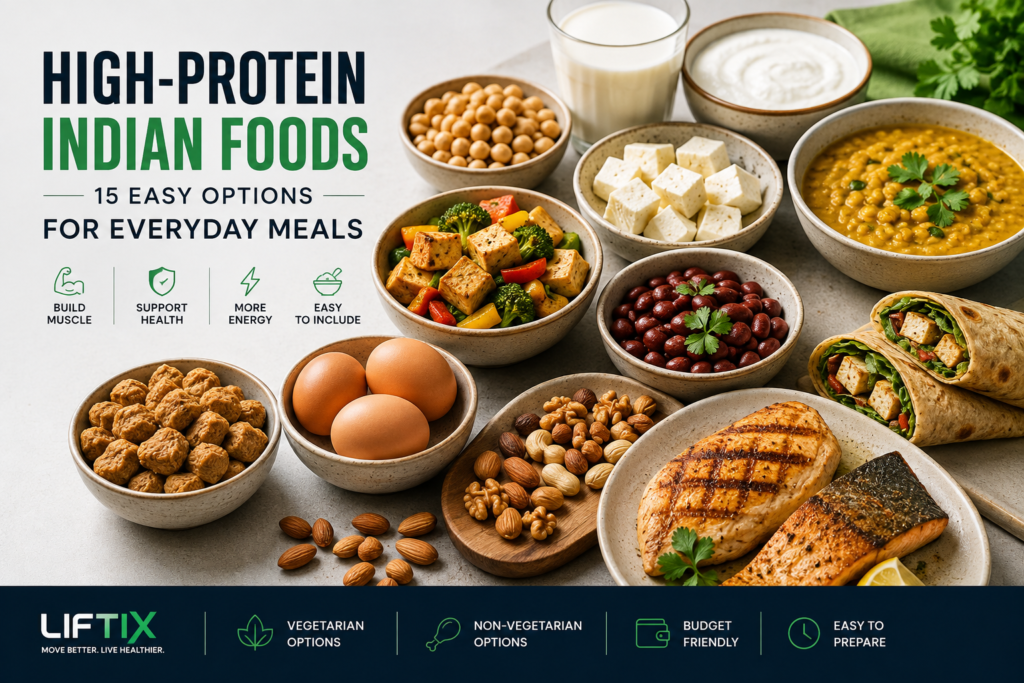
🥗 High-Protein Indian Foods: 15 Easy Options for Everyday Meals
Introduction Protein is an important part of a balanced diet. It helps support muscles, bones and many essential functions in the body. If you’re working out, trying to stay active, or simply looking to improve your everyday diet, getting enough protein can be useful. And you don’t need expensive supplements or complicated meals to include more protein in your diet. India has plenty of accessible protein-rich foods that can be incorporated into regular meals. Here are 15 easy options to consider. 1. Eggs 🥚 Eggs are one of the easiest protein-rich foods to add to your diet. You can have them boiled, scrambled, as an omelette or alongside your regular breakfast. Easy idea: Vegetable omelette with whole-grain toast. 2. Paneer Paneer is a popular vegetarian option and can be used in a variety of meals. Try it as: Easy idea: Paneer bhurji with roti. 3. Greek Yogurt / Hung Curd Greek yogurt and hung curd can provide protein while also being versatile. You can have them as a snack, breakfast or as part of a meal. Easy idea: Add fruit, nuts and seeds for a simple breakfast bowl. 4. Milk 🥛 Milk is an easy way to add protein to your everyday diet. Have it with breakfast, in smoothies or simply as a drink. Easy idea: A banana and milk smoothie. 5. Dal Dal is a staple in many Indian households and can contribute to your daily protein intake. Different varieties include: Easy idea: Dal + rice + vegetables for a balanced meal. 6. Chickpeas (Chana) Chickpeas are versatile and can be used in both meals and snacks. Try: Chana salad → Chana chaat → Chole → Roasted chana They’re especially convenient for vegetarian diets. 7. Rajma Rajma is another familiar Indian food that can contribute protein to your diet. A classic combination is: Rajma + rice + vegetables You can also add rajma to salads or wraps. 8. Soybeans Soy-based foods can be a useful protein option, particularly for people following vegetarian diets. You can include soybeans or other soy foods in meals depending on your preferences. 9. Tofu Tofu is another versatile plant-based option. It can be: Easy idea: Tofu and vegetable stir-fry. 10. Soya Chunks Soya chunks are an affordable and convenient way to add more protein to meals. You can use them in: Easy idea: Soya chunk curry with roti. 11. Peanuts 🥜 Peanuts are an easy snack and contain protein along with fats and other nutrients. You can have them roasted, add them to salads or use peanut butter with toast. Remember that peanuts and peanut butter are also calorie-dense, so portion size matters. 12. Almonds and Other Nuts Nuts can contribute protein to your diet while providing healthy fats. Try adding a small portion to: They’re best viewed as a nutrient-rich addition, rather than your main protein source. 13. Fish 🐟 For people who eat non-vegetarian food, fish can be an excellent protein source. You can prepare it grilled, baked, steamed or as part of an Indian curry. Easy idea: Grilled fish with vegetables and rice. 14. Chicken 🍗 Chicken is a popular high-protein food, particularly among people who exercise regularly. Simple options include: Easy idea: Grilled chicken with rice and vegetables. 15. Protein Powder Protein powder can be convenient when you’re struggling to get enough protein from food. However, it doesn’t need to replace normal meals. A protein shake can be used as a convenient addition to an otherwise balanced diet. Easy idea: Protein powder blended with milk, oats and fruit. How Much Protein Do You Need? There isn’t one protein target that works for everyone. Your needs can depend on factors such as: Someone who regularly participates in strength training may have different needs from someone who is mostly sedentary. Instead of focusing only on a single number, start by making sure your meals regularly include a good protein source. How to Add More Protein to Your Everyday Meals You don’t need to completely change your diet. Try simple swaps and additions. Breakfast Eggs + toast + fruit or Greek yogurt + oats + fruit Lunch Dal + rice + vegetables or Chicken/paneer + roti + salad Snack Roasted chana + fruit or Yogurt + nuts Dinner Paneer/tofu/chicken + vegetables + roti Small changes can make it easier to increase your overall protein intake. Vegetarian vs Non-Vegetarian Protein Sources You don’t need to eat meat to get protein. Vegetarian options Non-vegetarian options The best approach is to choose foods that fit your dietary preferences, budget and lifestyle. Don’t Forget About a Balanced Diet Protein is important, but it isn’t the only part of a healthy diet. Your meals should also include a variety of: 🥦 Vegetables🍎 Fruits🌾 Whole grains🥜 Healthy fats💧 Adequate fluids Think of protein as one part of the bigger picture, rather than the entire diet. Final Thoughts Getting more protein doesn’t have to mean eating complicated meals or relying entirely on supplements. From dal, paneer and chickpeas to eggs, chicken and fish, Indian diets already have plenty of options. Start by adding a protein source to your regular meals and build the habit gradually. Better nutrition doesn’t have to be complicated. It just needs to be consistent.